
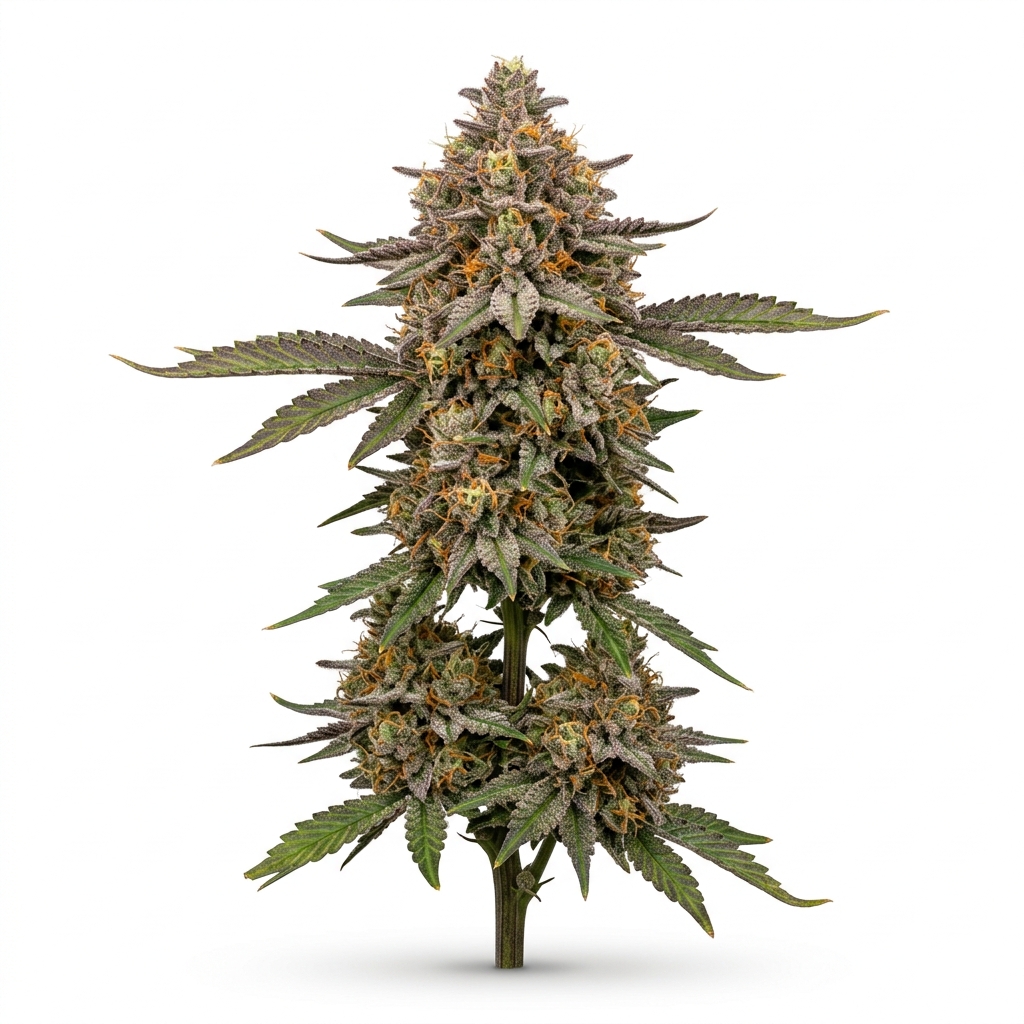


Bred by Symbiotic Genetics, Mimosa is a renowned sativa-dominant hybrid created by crossing Clementine and Purple Punch. This cultivar is highly regarded for its distinctive aroma of fresh citrus zest, orange juice, and sparkling tropical fruit, accented by light herbal and peppery undertones from its dominant terpenes, limonene and beta-caryophyllene. In cultivation, Mimosa exhibits vigorous vegetative growth with a notable stretch during early bloom, requiring active canopy management. Mature flowers have a reported potential of 19% to 27% THC and under 1% CBD, offering exceptionally resinous, olive-green buds with frequent purple expression. Performance and physical traits vary based on environment, but growers typically report a flowering period of 9 to 10 weeks.
Mimosa Cannabis Seeds
Price range: $65.00 through $240.00
Description
AI Editorial Cultivar Score8.8/10
Outstanding Citrus Hybrid
Editorial assessment for comparison only; not a laboratory result or product guarantee.
Aroma Complexity9.5/10
Offers an exceptionally loud, bright orange juice and sparkling champagne profile with deep tropical notes.
Resin Potential9.0/10
Inherited dense trichome coverage and heavy resin production from its Purple Punch parent.
Visual Appeal9.2/10
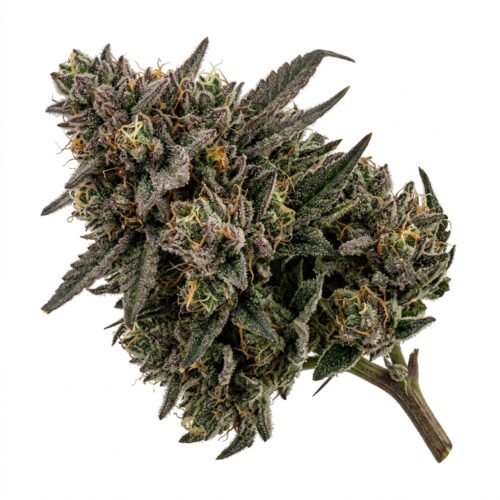
Produces beautiful olive-green and deep purple-dappled buds contrasted by fiery orange pistils.
Cultivation Accessibility7.8/10
Requires moderate skill to manage significant height stretch and environmental needs.
Documentation Confidence9.0/10
Well-documented and highly stable lineage from Symbiotic Genetics with plenty of verified grow reports.
Reported flower potentialCannabinoid Overview
Reported cannabinoid values can vary by phenotype, environment, harvest timing, and testing method.
Genetic relationshipLineage Diagram
Clementine
Purple Punch
Mimosa Cannabis Seeds
Reported aromatic compoundsTerpene Profile
Limonene
Bright citrus, fresh orange zest, sweet tangerine
The primary dominant terpene responsible for the signature orange juice and sparkling wine fragrance.
Beta-Caryophyllene
Spicy, peppery, warm wood
Adds a mild herbal and peppery warmth to balance the sweet, fruity notes.
Myrcene
Earthy, herbal, musk
Rounds out the sharp citrus top notes with a soft, grounding, organic base.
Cultivation referenceGrow Information
Essential cultivar details
Quick Facts
Key genetics, cultivation, and reported characteristics at a glance.
GeneticsClementine x Purple Punch
Breeder / OriginSymbiotic Genetics
Cultivar Typesativa-dominant hybrid
Seed TypeAvailable as Feminized, Autoflower & Regular
PhotoperiodNot specified — verify before publishing
Reported THC Potential19% – 27%
Reported CBD Potential<1%
Flowering Time9 – 10 weeks
Plant Height100 – 170 cm
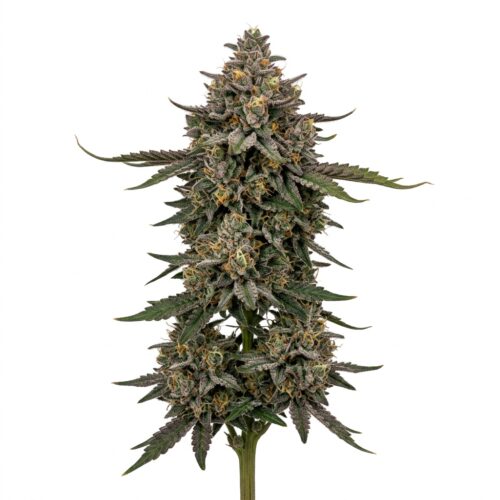
StretchSignificant vertical stretch during early flowering
DifficultyModerate
Yield CharacteristicsIndoors: 400–550 g/m²; Outdoors: 550–650 g/plant under optimized conditions
Indoor SuitabilityYes
Outdoor SuitabilityYes
Greenhouse SuitabilityYes
Climate PreferenceWarm, sunny, temperate climates with controlled humidity
Dominant TerpenesLimonene, Beta-Caryophyllene, Myrcene
Research ConfidenceHigh
Scientific Overview
Mimosa is a modern sativa-dominant hybrid (approximately 70% sativa and 30% indica) bred in California by Symbiotic Genetics. It represents a precise genetic bridge between the heavily resinous Granddaddy Purple/Larry OG line (via Purple Punch) and the highly aromatic Tangie/Lemon Skunk line (via Clementine). This combination yields a rich chemical profile where the limonene-driven citrus notes mask a deeper, terpene-rich base of beta-caryophyllene and myrcene. Phytochemical analysis consistently shows high concentrations of monoterpenes and sesquiterpenes that work in synergy with its reported 19% to 27% mature-flower THC potential.
Genetics & Lineage
Mimosa was developed in 2017 in Sacramento, California, by the breeder team Symbiotic Genetics. Its lineage is a direct cross of Clementine (a citrus-rich, sativa-dominant Tangie x Lemon Skunk hybrid) and Purple Punch (an indica-dominant Granddaddy Purple x Larry OG cross). The breeding objective was to pair the outstanding structural integrity, dense calyxes, and heavy resin of Purple Punch with the vibrant, zesty organoleptic qualities of Clementine. The resulting offspring showcases a highly stable 70/30 sativa-leaning architecture.
Breeder Background
Symbiotic Genetics is a boutique California-based breeding outfit renowned for developing modern, high-terpene cultivars. Emerging as a dominant force in the late 2010s, Symbiotic Genetics has focused on creating sensory-forward hybrids rather than purely chasing raw THC percentages. Mimosa remains one of their most celebrated flagship creations, winning multiple accolades including podium finishes at the Highlife Cup and Clouds in the City Cup in 2021.
Botanical Characteristics
As a sativa-dominant hybrid, Mimosa exhibits rapid vegetative growth and develops a strong, upright branching structure. The leaves are typically broad but can thin out as the plant transitions to flower, demonstrating its hybrid nature. The internodal spacing is moderate to wide, demanding active pruning or topping to maximize canopy efficiency. It shows excellent vigor and responds well to low-stress training (LST) and Screen of Green (ScrOG) cultivation styles.
Flower Structure
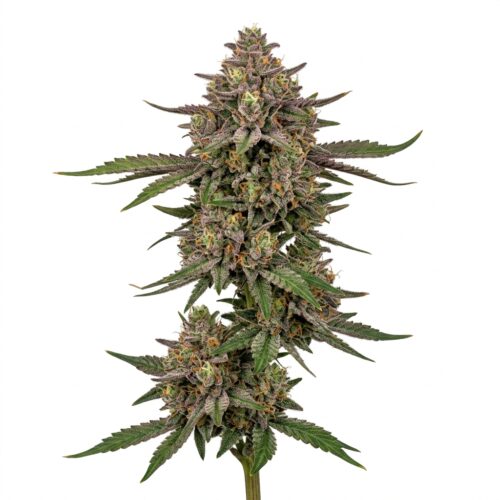
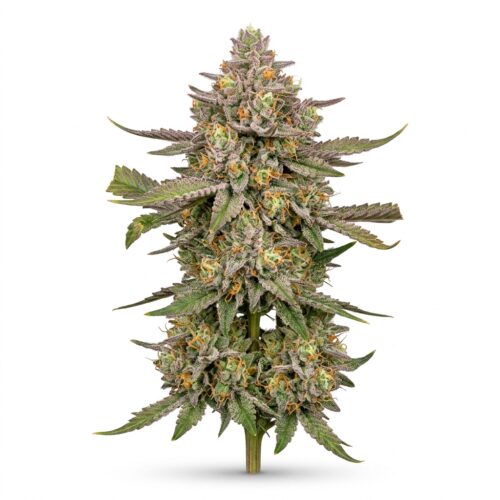
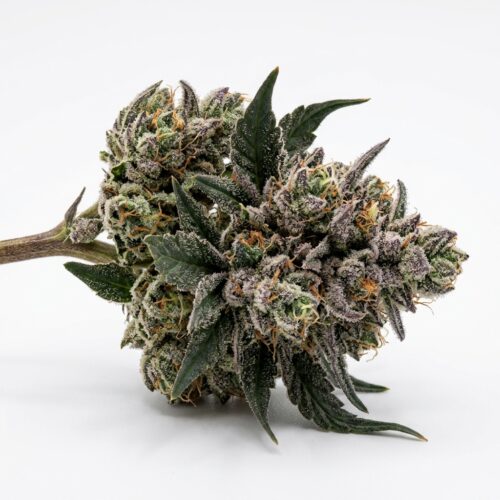
The flowers of Mimosa are exceptionally dense and bulbous with slightly pointed tips, often taking on a conical or ‘Christmas tree’ appearance. Structurally, the calyxes are tightly packed and heavily coated in glandular trichomes that offer a sparkling, frosted look. Coloration is a striking mix of olive green and deep violet or royal purple, accentuated by a thick network of fiery orange pistils weaving throughout the bud structure.
Aroma & Flavor Profile
Mimosa’s aroma is incredibly loud, immediately filling a room with notes of fresh-cut orange, sweet tangerine, and sharp citrus zest. Underneath the citrus top notes lies a complex bouquet of sour white wine, tropical fruits, and a hint of sweet berry. On the palate, it tastes remarkably like its namesake brunch cocktail—sweet, effervescent citrus on the inhale, transitioning to a smooth, grounded exhale with subtle hints of earthy berry and peppery spice.
Cultivation Overview
Mimosa is classified as moderately difficult to cultivate, primarily due to its significant physical stretch during the transition to the flowering cycle and its sensitivity to environmental fluctuations. It thrives in a highly optimized climate with daytime temperatures between 21°C and 29°C (70°F to 84°F) and nighttime drops of up to 12°C to help stimulate the expression of purple coloration. Relative humidity must be carefully regulated: 50% to 70% in veg, dropping to 40% to 50% in late bloom to prevent mold.
Indoor Considerations
Indoor growers must anticipate a significant height stretch when switching the photoperiod to 12/12. Canopy management strategies like topping, training, or SCROG are highly recommended to control vertical height and promote lateral budding. The plants respond well to high-intensity lighting and standard nutrient feeding programs, with a typical flowering window of 9 to 10 weeks (or 55 to 65 days).
Outdoor Considerations
When grown outdoors, Mimosa requires a warm, sunny, and temperate climate to reach its full potential. In the Northern Hemisphere, harvests generally occur in mid-to-late October. Because of its dense bud structure, protection from late-season rainfall and high humidity is essential to mitigate the risk of mold or botrytis. Outdoor plants can grow quite large, offering substantial yields under full sun.
Phenotype Variation
While Symbiotic Genetics’ original line is highly stable, phenotype variations do occur. Some phenos lean heavily toward the Clementine parent, showing bright green-gold colas and a sharp, pure orange profile. Other phenotypes express more of the Purple Punch heritage, displaying darker purple-dappled foliage, a more compact stature, and an aroma containing distinct grape and berry undertones alongside the citrus.
Frequently Asked Questions
What is the genetic lineage of the Mimosa strain?
Mimosa is a sativa-dominant hybrid created by crossing Clementine (Tangie x Lemon Skunk) with Purple Punch (Larry OG x Granddaddy Purple).
Who is the original breeder of Mimosa?
Mimosa was originally bred in Sacramento, California, by the world-renowned breeding company Symbiotic Genetics in 2017.
How long does Mimosa take to flower?
Mimosa typically has an indoor flowering time of 9 to 10 weeks (or approximately 55 to 65 days) from the start of the 12/12 light cycle.
What does Mimosa smell and taste like?
It is famous for its bright, loud aroma of fresh oranges, tangerine zest, and sparkling tropical fruit, with sweet, smooth flavors and subtle peppery undertones.
Is Mimosa difficult to grow?
It is rated as moderate difficulty. While it grows vigorously, cultivators must manage its significant vertical stretch during early flowering and maintain tight control over humidity.
Disclaimer
This profile is an informational cultivar draft. It does not represent guaranteed outcomes, and individual crop performance, cannabinoid content, and terpene concentration will vary significantly based on growing environment, medium, lighting, and cultivation expertise.
Additional information
| Packs | 5 Seeds, 10 Seeds, 25 Seeds |
|---|



Reviews
There are no reviews yet.