


Blue Runtz is a highly sought-after indica-dominant hybrid, most commonly recognized as a selection from a cross of White Runtz and DJ Short Blueberry. Known for outstanding bag appeal, mature flowers showcase a deep spectrum of violet and blue hues beneath a frosty layer of resin. The terpene profile is dominated by limonene, myrcene, and caryophyllene, delivering an aromatic signature of sweet berry candy, creamy vanilla, and a distinct gassy finish. Cultivators report a medium-height profile with a manageable flowering phase of 8 to 9 weeks. While clone-only selections circulate widely, specific seed variants exist from specialized breeders. This cultivar is renowned for producing exceptionally dense, resin-loaded colas that require structural support during late bloom.
Blue Runtz Cannabis Seeds
Price range: $65.00 through $240.00
Description
AI Editorial Cultivar Score8.5/10
Premium Modern Hybrid
Editorial assessment for comparison only; not a laboratory result or product guarantee.
Aroma Complexity9.2/10
An intricate blend of sweet berry, dessert-like vanilla, and strong gas undertones.
Resin Potential8.8/10
Produces exceptionally sticky buds that are heavily laden with trichomes, suitable for extraction.
Visual Appeal9.0/10
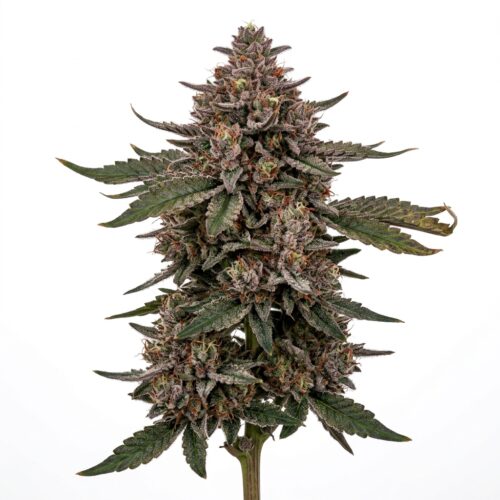
Striking dark violet and blue hues emerge during late flowering under cooler temperatures.
Cultivation Accessibility7.5/10
Requires moderate effort due to dynamic vertical stretch and high moisture retention in dense buds.
Documentation Confidence8.0/10
Extensively documented in clone circles, though specific commercial seed lineages can vary by breeder.
Reported flower potentialCannabinoid Overview
Reported cannabinoid values can vary by phenotype, environment, harvest timing, and testing method.
Genetic relationshipLineage Diagram
Blueberry
Blue Runtz Cannabis Seeds
Reported aromatic compoundsTerpene Profile
Limonene
Sweet citrus frosting and zest
The most dominant terpene in Blue Runtz, adding sharp citrus brightness and complementing the candy sweetness.
Myrcene
Ripe berry syrup and soft earth
Contributes to the deep fruitiness and promotes relaxing physical sensations.
Caryophyllene
Spicy gas, fuel, and mild wood
Introduces a rich, herbal gas note on the finish, balancing the dessert-like profile.
Cultivation referenceGrow Information
Essential cultivar details
Quick Facts
Key genetics, cultivation, and reported characteristics at a glance.
GeneticsWhite Runtz x Blueberry (commonly reported); alternative versions include Grape Runtz x Blue Z (GLK Genetics) or Blue Power x Double Lemon Cherry (James Loud Genetics)
Breeder / OriginNot specified — verify before publishing
Cultivar Typeindica-dominant hybrid
Seed TypeAvailable as Feminized, Autoflower & Regular
PhotoperiodNot specified — verify before publishing
Reported THC Potential20% – 30%
Reported CBD PotentialUnder 1% (commonly reported around 0.1%)
Flowering Time8-9 weeks (56-63 days)
Plant HeightMedium
Stretch1.5x – 1.8x (can stretch quickly during the first 2-3 weeks of bloom)
DifficultyMedium
Yield CharacteristicsMedium to high (approx. 1.6 to 2.0 lbs per light indoors under optimized conditions)
Indoor SuitabilityYes
Outdoor SuitabilityYes
Greenhouse SuitabilityYes
Climate PreferenceWarm, temperate, sunny climates with low relative humidity in late bloom to protect dense buds
Dominant TerpenesLimonene, Myrcene, Caryophyllene
Research ConfidenceHigh
Scientific Overview
Blue Runtz represents a highly refined intersection of classic fruit-forward cultivars and modern candy-gassy dessert genetics. Synthesizing the terpene and cannabinoid expressions of its parents, this indica-dominant hybrid typically tests high in THCA potential, with mature flowers frequently reaching between 20% and 30% THC. The primary chemical profile is governed by a prominent limonene, myrcene, and caryophyllene terpene makeup, producing a complex aroma often described as ‘candy gas.’ Its physiological growth patterns indicate a sturdy vegetative structure that transitions into a moderately demanding flowering phase characterized by dense, moisture-retentive floral clusters and significant vertical expansion. The cultivar produces notable anthocyanins, leading to striking purple coloration when exposed to lower nocturnal temperatures late in the flowering cycle.
Genetics & Lineage
The genetic legacy of Blue Runtz is multifaceted due to its popularity across various independent breeding circles. In its most widely circulated clone-only format, the cultivar is a direct cross of White Runtz (Zkittlez x Gelato) and the legendary DJ Short Blueberry. This combination merges the sweet, creamy gas of the contemporary Cookie/Runtz family with the classic, forest-fruit terpene profile of the traditional Blueberry line. However, alternative versions exist under the same moniker. For instance, GLK Genetics has offered a variant derived from Grape Runtz crossed with Blue Z. Meanwhile, James Loud Genetics breeds ‘Bleu Runtz’ as a cross between Blue Power and Double Lemon Cherry. This diversity underscores the importance of verifying the specific seed packet origin before cultivation.
Breeder Background
The exact origin of the classic clone-only Blue Runtz remains somewhat anonymous within the legacy market, often attributed broadly to the Runtz Crew or early underground selectors. Over time, the massive consumer demand for this profile led multiple established breeders to release their own interpretations. James Loud Genetics, an artisanal breeder known for robust terpene selection, utilized Blue Power to elevate the traits of Double Lemon Cherry for their Bleu Runtz version. Similarly, GLK Genetics and other European and American seed banks have worked to stabilize this line into viable seed stocks. Consequently, ‘Blue Runtz’ represents a collective effort across modern cannabis breeding rather than a single proprietary creation.
Botanical Characteristics
During the vegetative stage, Blue Runtz exhibits typical hybrid vigor with strong, lateral branching and dark green foliage. The leaves are generally broad with pronounced serration, reflecting its heavy indica background. As the plant enters the flowering phase, it undergoes a quick vertical stretch of 1.5x to 1.8x, demanding proactive canopy management such as low-stress training (LST) or screen of green (ScrOG) techniques. The plant’s internal structure is robust, though its lateral branches can easily become overwhelmed by the sheer weight of its mature buds, making external physical support a strict requirement in late bloom.
Flower Structure
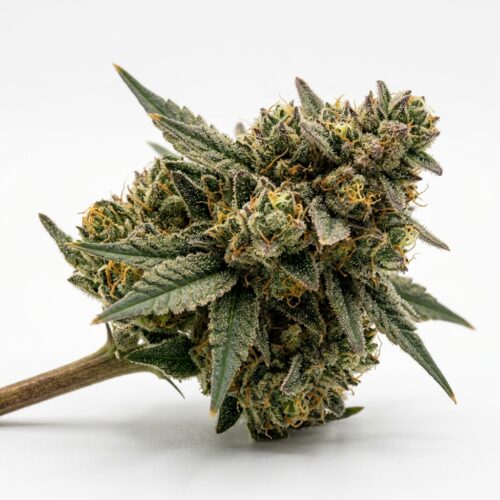
Mature flowers of Blue Runtz are highly distinctive, forming chunky, dense, golf-ball-sized clusters with minimal leaf-to-calyx ratio. The buds are exceptionally compact and sticky, heavily coated with sticky, capitate-stalked trichomes that glisten under light. Under optimal conditions, the calyxes show a beautiful gradient from vibrant forest green to deep royal purple and indigo, driven by natural anthocyanin accumulation. These dark hues contrast sharply with the curly, bright orange-to-amber pistils that cover the floral clusters, creating a stunning visual profile highly prized by modern connoisseurs.
Aroma & Flavor Profile
Blue Runtz is celebrated for a complex, multi-layered aromatic profile. Upon opening a cured container, the initial aroma is a loud wave of sweet, artificial berry candy and creamy vanilla syrup. This initial sweetness quickly opens up to reveal deep, pungent undertones of sour citrus, spicy fuel, and earthy pine. When combusted or vaporized, the flavor mirrors the aroma with a smooth, velvety smoke. The palate is coated with notes of freshly baked blueberry pie and a sharp, gassy finish that lingers long after exhalation, a testament to its deep terpene concentration.
Cultivation Overview
Cultivating Blue Runtz requires an intermediate level of experience to maximize genetic potential. While it exhibits steady growth and is relatively forgiving of minor environmental fluctuations, its dense floral clusters make it particularly vulnerable to high humidity during late flowering. It performs exceptionally well in indoor controlled environment agriculture (CEA) setups where temperature, humidity, and airflow can be strictly regulated. Cultivators are advised to employ active airflow strategies, such as oscillating fans and powerful dehumidification, to mitigate the risk of bud rot (botrytis) and powdery mildew. Outdoor cultivation is highly viable in Mediterranean-like climates with dry, warm autumns.
Indoor Considerations
Indoors, Blue Runtz thrives in soil, coco coir, or hydroponic systems. Due to its vertical stretch of up to 1.8x, growers should transition plants to the 12/12 photoperiod when they are roughly 20 to 24 inches tall to prevent canopy crowding. The cultivar responds beautifully to defoliation at day 1 and day 21 of flower, which opens up the canopy for better light penetration and air movement. Maintaining daytime temperatures around 74-78°F, with a relative humidity starting around 55% and tapering down to 40% in the final weeks, will optimize resin production and flower density. Dropping night temperatures by 10-15°F during the last two weeks will safely trigger its vibrant purple and blue colors.
Outdoor Considerations
When grown outdoors, Blue Runtz requires a warm, sunny environment with plenty of space. Plants can easily exceed 6 feet in height and width when planted directly in the ground or in large fabric pots. A breezy, open location with full sun exposure is ideal. To protect the dense colas from autumn rains and morning dew, a protective hoop house or greenhouse cover is recommended if harvesting in late October. Growers should actively monitor for pests such as spider mites and aphids, and implement a preventative pest management routine during the vegetative cycle. Trellising or heavy-duty stakes are essential to prevent the lateral branches from breaking under the weight of the massive colas.
Phenotype Variation
Because Blue Runtz is offered by multiple breeders and exists in both clone-only and various seed formats, growers can expect some phenotypic variation. Selections descending from the Blueberry x White Runtz lineage typically split into two main phenotypes: a gas-dominant Runtz pheno with dense, rounded buds and subtle purple accents, and a fruit-dominant pheno that leans heavily into the sweet, blueberry muffin-like aroma with a slightly more stretched bud structure. James Loud’s ‘Bleu Runtz’ presents a citrus-forward phenotype heavily influenced by its Double Lemon Cherry parent, while GLK’s version displays a grape-heavy aromatic profile. Testing a small run of clones or seeds is recommended to identify the preferred mother plant.
Frequently Asked Questions
What is the genetic lineage of Blue Runtz?
While multiple breeder variations exist, the most widely recognized classic clone-only version of Blue Runtz is a cross between White Runtz and the legendary DJ Short Blueberry.
How long does Blue Runtz take to flower?
Blue Runtz typically has an indoor flowering time of 8 to 9 weeks, which translates to approximately 56 to 63 days before reaching full maturity.
What does Blue Runtz smell like?
This cultivar features a complex, loud aroma of sweet berry candy and creamy vanilla, balanced by sharp, pungent undertones of sour citrus, spicy fuel, and gas.
Is Blue Runtz easy to grow for beginners?
It is generally rated as an intermediate-to-advanced grow. While resilient, its dense buds are sensitive to high humidity, and the plant requires active support stakes to prevent branches from breaking under the weight of its heavy colas.
What are the primary terpenes in Blue Runtz?
The dominant terpenes in Blue Runtz are limonene, myrcene, and caryophyllene, which collectively drive its sweet, fruity, and gassy profile.
Disclaimer
Cannabis seeds are sold strictly as collectible adult souvenirs. Germination and cultivation of cannabis seeds are subject to local, state, and federal regulations. It is the responsibility of the purchaser to ensure compliance with all applicable laws in their jurisdiction. All technical data, cannabinoid potentials, and growth characteristics are provided for informational and educational purposes only, based on publicly available breeder documentation and community reports. Individual cultivation outcomes and plant performance will vary depending on environmental conditions, equipment, and grower skill.
Additional information
| Packs | 5 Seeds, 10 Seeds, 25 Seeds |
|---|



Reviews
There are no reviews yet.